


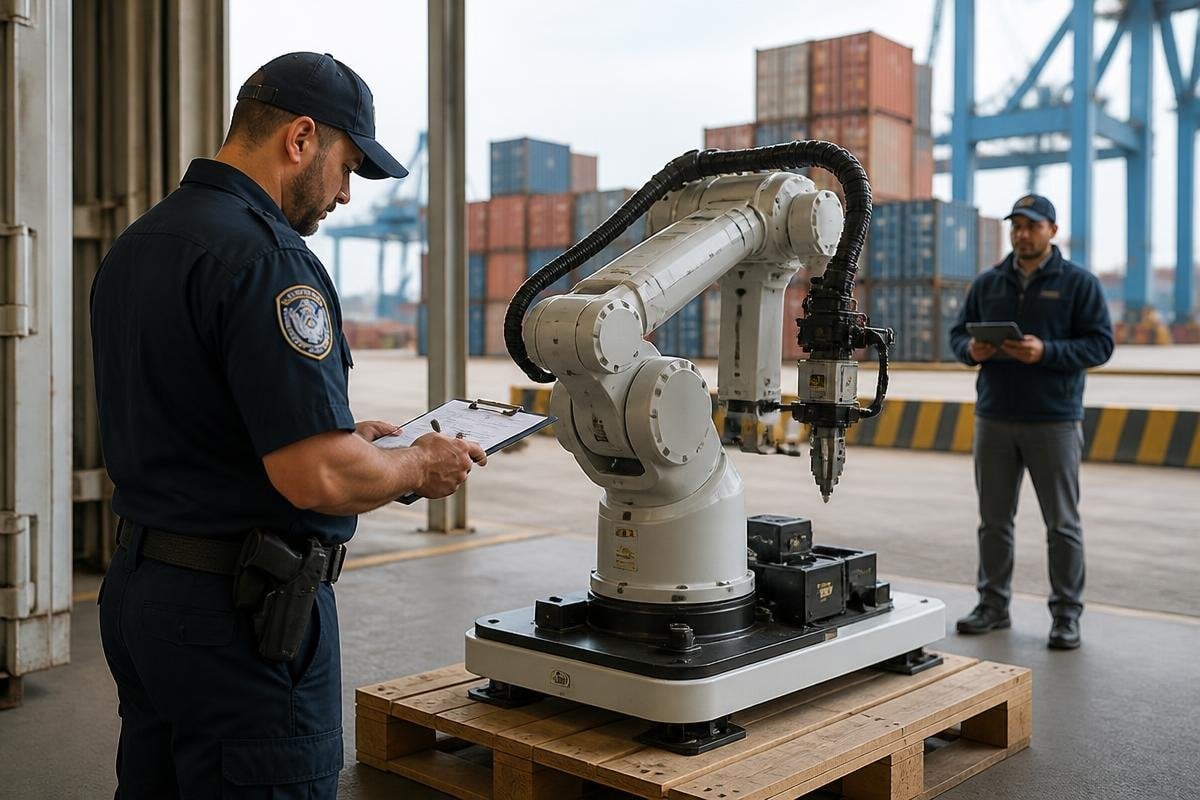
A robot can finish its factory test in one country and face a new set of rules the moment it enters another. The machine may need new import documents, safety checks, network settings, and a local person who can fix it.
Quick read
- Customs needs a clear description of the robot, its parts, and its value.
- Safety duties can change when the robot moves from a lab to a work site.
- Data, remote control, batteries, and repairs can create new border issues.
The machine becomes an imported product
The first issue is classification. Customs officials need to know what the robot is, what it does, and which parts arrive with it. A mobile robot, industrial arm, inspection drone, or research platform may each require different paperwork.
That paperwork can include the invoice, product description, country of manufacture, serial numbers, and details about batteries or radio equipment. Missing or vague information can delay delivery while officials ask what the shipment contains.
The robot’s value also matters. Customs charges may use the price of the full machine, separate parts, or repair components.
A company sending a robot back for service should document that it is a temporary export or a returned product when the local rules allow those categories. A damaged motor can create the same problem on a smaller scale. If the replacement part is held at the border, the robot may sit idle even though the repair itself takes one hour.
Safety rules follow the work site
Meeting the rules in its home country may not end the review after arrival. The receiving country can set its own requirements for electrical safety, radio signals, machinery, workplace use, and operator training.
The risk changes with the task. A robot kept inside a research lab has a different safety case from one that carries loads near workers. A company must check the robot’s intended use, not rely only on the maker’s general product label.
That review should cover the full system. The robot, gripper, charging equipment, software, fences, emergency stop, and control network can all affect safe operation. A change to one part can alter how the whole setup behaves.
Remote support adds another layer. If an engineer in the home country can control the robot or change its software, the customer needs clear rules for access, logging, and approval before that connection is used.
Data does not stop at the border
Many robots collect video, maps, location data, machine readings, or worker information. Sending that data to another country can bring privacy and security duties that did not apply in the same way during the original test.
The company should map where data is collected, where it is stored, and who can view it. It should also state how long the records remain available and how the customer can remove them when the contract ends.
Software updates need the same care as spare parts. A change made from another country can affect safety settings, movement limits, or access rights. Keep a record of the version installed on each robot and the person who approved the change.
A robot crossing a border may arrive before the people who install, repair, and supervise it. Cross-border robotics reports can show which company handles that work, where support is based, and what happens when the machine needs service. Those details lead to the people and support that cross borders with it.
People and support cross borders too
A robot shipment rarely travels alone. Installers, trainers, repair staff, and safety reviewers may need permission to enter the receiving country. Their work can also affect tax, insurance, and employment duties.
Local support can reduce downtime, but it needs a clear contract. Set out who owns the spare parts, who may change software, how fast help must arrive, and which party pays when a repair is held at customs.
I’d delay the shipment until those duties are written down. A robot that arrives quickly but cannot run safely or be repaired locally is still a stopped project.
Border checklist before shipment
Use this list before the robot leaves its home country:
- Name the machine: record the model, serial number, purpose, parts, battery type, and declared value.
- Check the destination: confirm import, radio, electrical, machinery, and workplace rules.
- Map the data: list every place the robot sends video, maps, logs, or remote-control records.
- Plan the people: confirm entry permission, training duties, insurance, and local repair cover.
- Record the software: save the installed version, safety settings, access list, and approval record.
- Test the handoff: agree who receives the robot, checks it on arrival, and signs the first safety report.
The next useful step is a border plan tied to one robot, one task, and one destination. That document should name the owner for each open item before the shipping date is set.
